
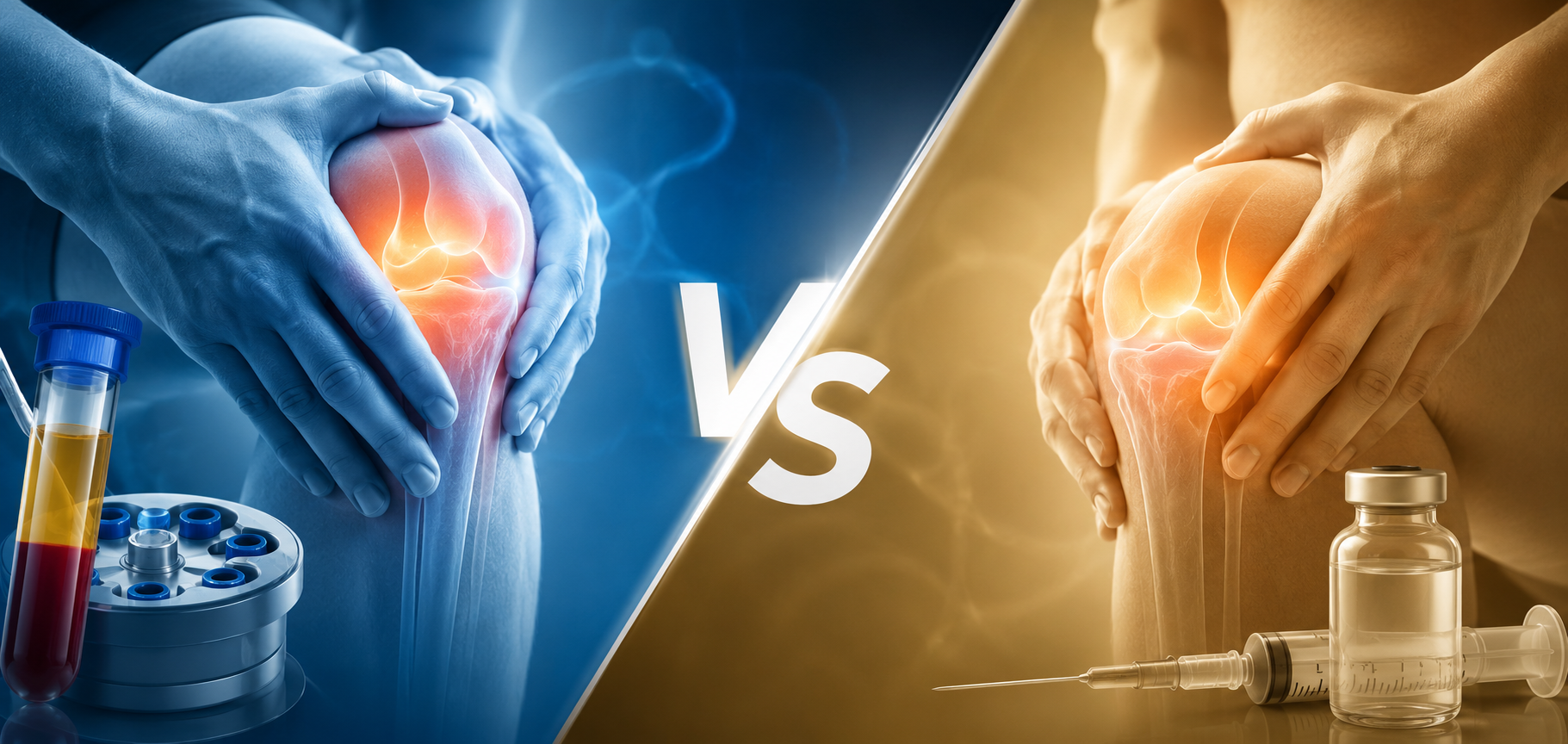
PRP vs. cortisone injection are two popular options often discussed in the treatment of joint pain. Both aim to reduce pain, but they do it in very different ways. iLIFE Anti-Aging provides state-of-the-art procedures, including regenerative joint therapy, that will help you move better and live pain-free.
What You Need to Know About PRP for Joint Pain
PRP stands for Platelet-Rich Plasma therapy for joint pain. It uses the body’s own healing system to heal the damaged tissue. A small amount of your blood is drawn and processed to concentrate the platelets, and then injected into the affected joint. This is part of regenerative joint therapy, which means it works with the body’s natural ability to heal, not just mask pain. PRP may have a positive effect on joint function and inflammation in the long term.
Benefits of PRP:
- Encourages natural healing
- Inhibits inflammation
- Promotes long-term healthy joints
- Less invasive
PRP is a popular choice at iLIFE Anti-Aging for those looking for long-term relief over a quick fix.
What Are Cortisone Injections?
Cortisone injections are used to rapidly reduce inflammation and pain. These contain a powerful steroid that is injected into the joint. When you compare cortisone shots to PRP, the cortisone works faster. But it doesn’t address the underlying issue. Instead, it provides temporary relief of symptoms. Cortisone injections have many benefits.
- Rapid pain relief
- Reduction of fast swelling
- Useful in short-term management
Cortisone injections can work wonders in the short term but repeated injections can weaken tissues over time
Difference Between PRP And Cortisone Injection
Knowing the PRP vs. cortisone injection difference can help you to make the right choice:
1. Are you looking for healing or just temporary relief?
PRP promotes healing; cortisone only relieves symptoms.
2. Long-Term Results:
PRP has better long-term results than cortisone, which usually only lasts a short period of time.
3. Natural vs. Steroid-Based:
PRP is made from your own cells, while cortisone is a synthetic steroid.
4. Long-Term Effects: PRP is good for your joints; cortisone injections can have side effects with repeated use.
This is why many patients today are choosing PRP for joint pain as a safer and more sustainable treatment option.
How to Find the Right Joint Pain Treatment
Your treatment options for joint pain will depend on your condition, lifestyle, and long-term goals. Cortisone can help with some short-term relief from severe inflammation. However, if you’re looking for a solution that helps with healing and recovery, then regenerative joint therapy such as PRP is a better option.
Our specialists at iLIFE Anti-Aging evaluate your condition and recommend personalized treatments according to your health goals.
Why Regenerative Joint Therapy is Gaining in Popularity
Regenerative joint therapy is currently trending because it aims for long-lasting results and not only temporary relief. PRP therapy helps to repair the damaged tissues, improve the mobility, and reduce the need for medications. This can be especially helpful for people with chronic joint pain, sports injuries, or early joint breakdown.
Conclusion
Deciding between PRP and cortisone injection depends on what you want to get out of your treatment. If you want fast relief, cortisone might be right for you. But if you are looking for a more natural long-term solution, PRP for joint pain is a more effective route. Getting the right joint pain treatment options can make a world of difference to your quality of life. With regenerative joint therapy, you now have safer, more effective options for pain management and improving mobility as your therapy progresses.
Make Your Next Step To Living Pain-Free
Don’t let joint pain hold you back. Experience the power of PRP for joint pain at iLIFE Anti-Aging and return to comfortable movement. Book your consultation today and find out the best treatment option for your joint health and long-term wellness.